Contents
Overview
Timeline
In focus
Background
News stories
Resources
Overview
Timeline
In focus
Background
News stories
Resources
Sustainable finance is increasingly central to how countries mobilise investment, manage climate and environmental risks, strengthen financial-sector resilience and support inclusive growth. In Sierra Leone, the shift from awareness of environmental, social and governance (ESG) issues to a practical, sector-led sustainable finance framework has been built through dialogue, evidence, capacity building, practical tools and collaboration across the public and private sectors.
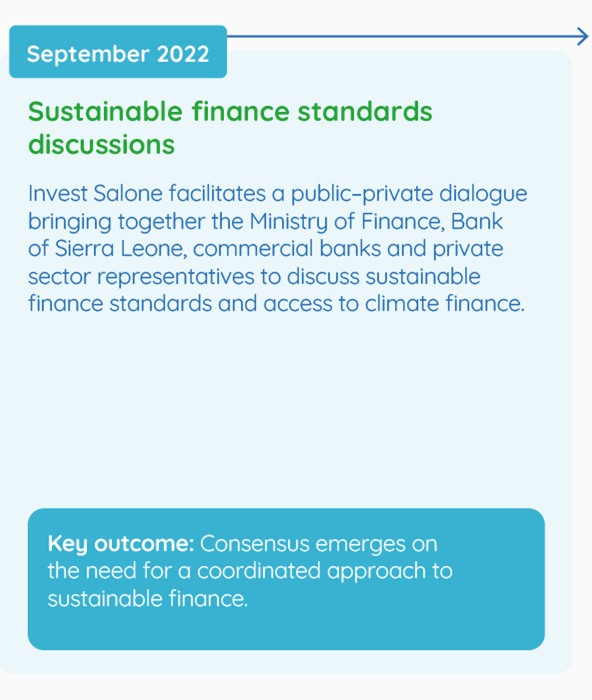
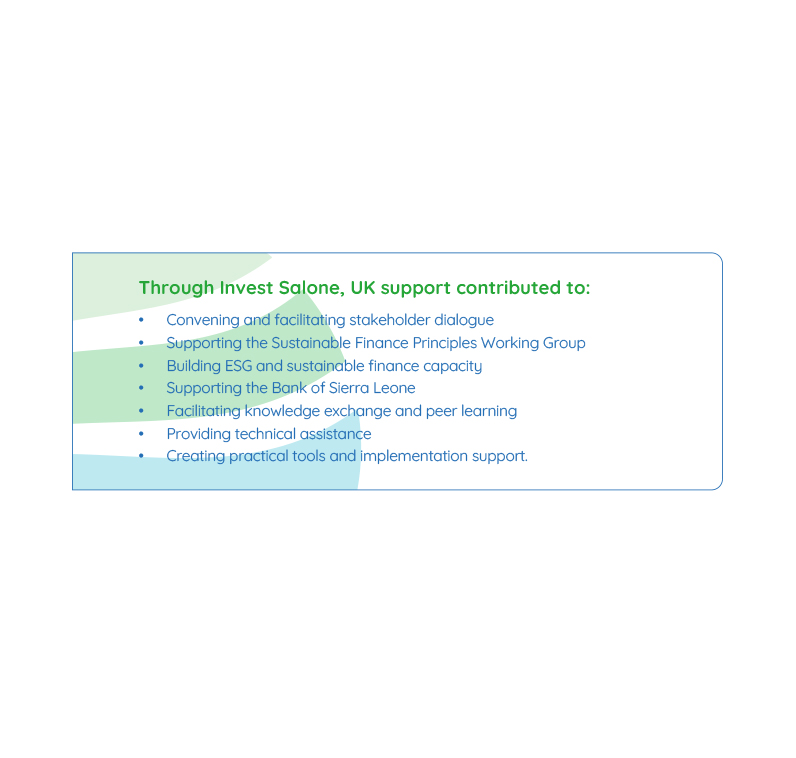
Since 2021, the UK, through Invest Salone, has supported this journey in partnership with Sierra Leone’s financial sector. Early engagement with the Sierra Leone Association of Commercial Banks opened a sector-wide conversation on ESG standards and green growth.
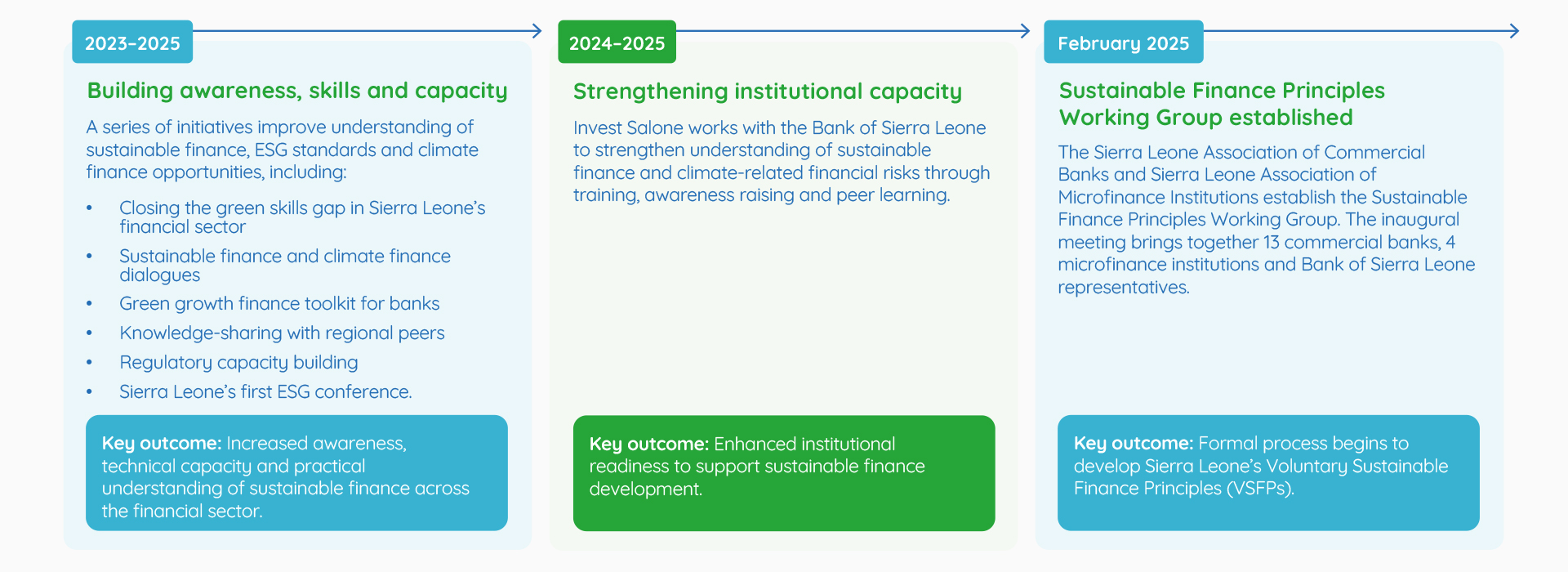
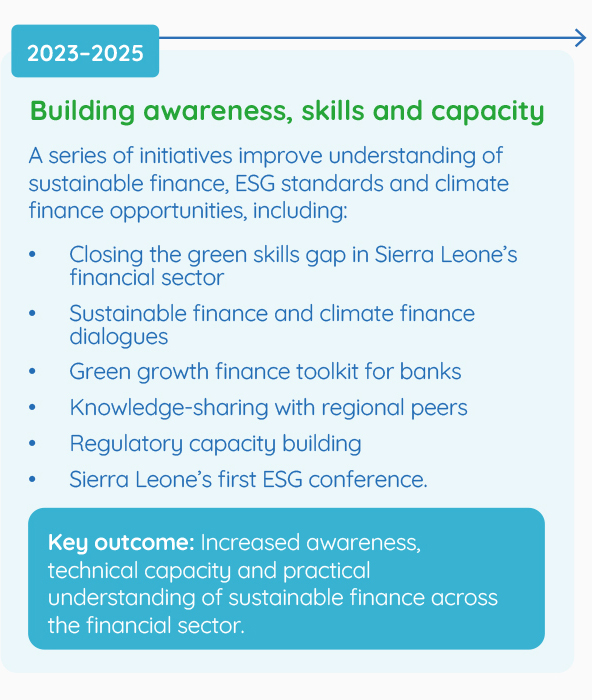
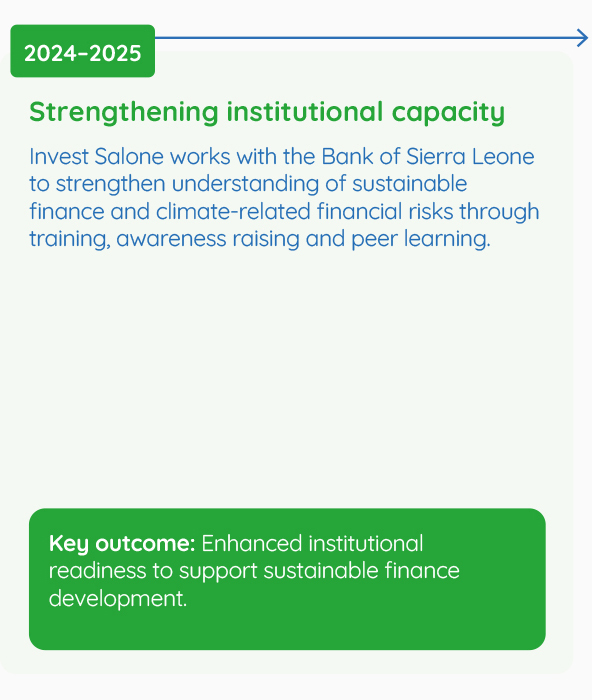
The conversation developed into public–private dialogue, research and surveys, training, knowledge exchange and the creation of practical tools. This was carried out alongside work with the Bank of Sierra Leone and financial-sector stakeholders to strengthen institutional capacity, understand sector needs and translate sustainable finance concepts into practice. Initiatives including green-skills training, regional knowledge exchange, the Green Growth Finance Toolkit and the Sustainable Finance Survey created a stronger evidence base and helped prepare institutions for a more coordinated, sector-led approach.
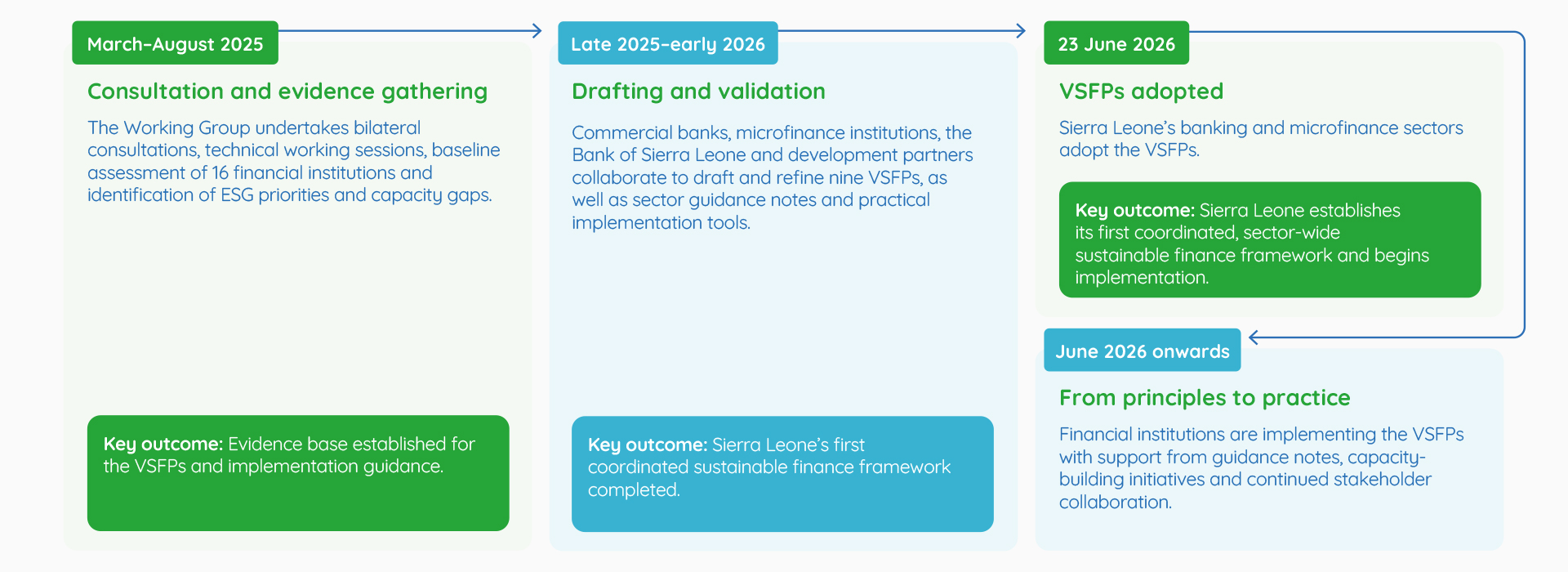
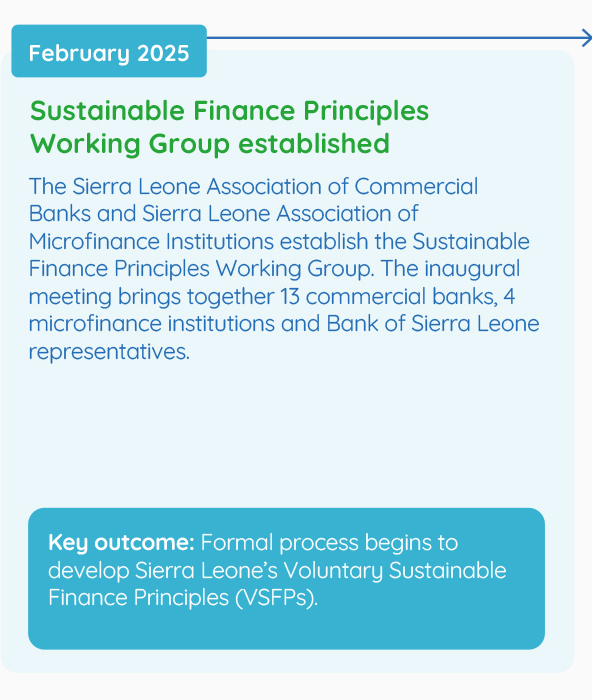
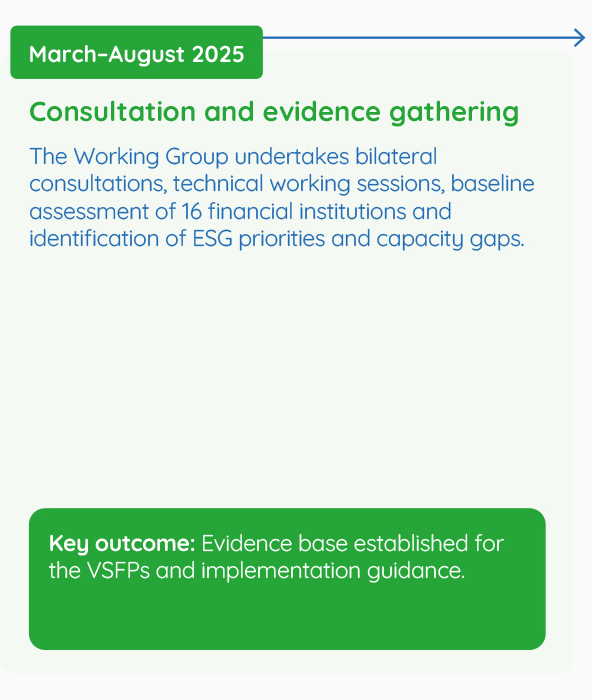
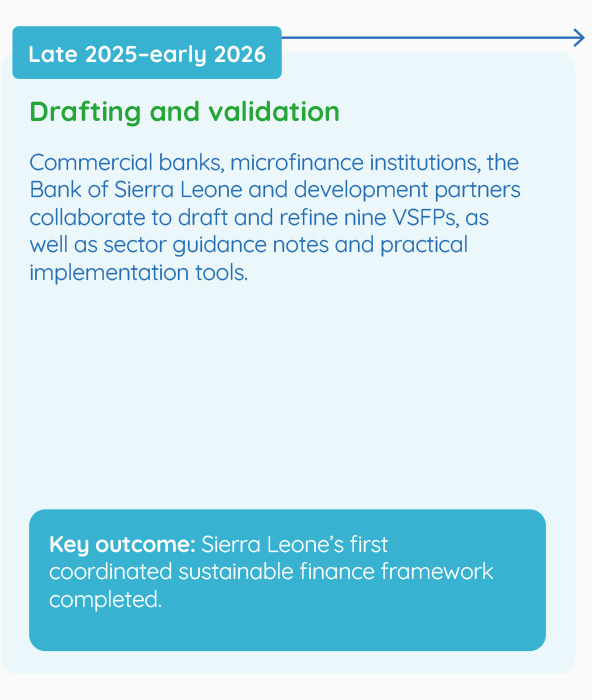
Importantly, the work progressed in stages rather than beginning with a pre-defined framework and asking the market to adopt it. By 2025, the Sierra Leone Association of Commercial Banks and the Sierra Leone Association of Microfinance Institutions had established the Sustainable Finance Principles Working Group. Supported by Invest Salone’s technical assistance and facilitation, working-group sessions, bilateral consultations, self-assessments and senior-level validation helped identify priorities and shape principles grounded in the realities of Sierra Leone’s financial market.
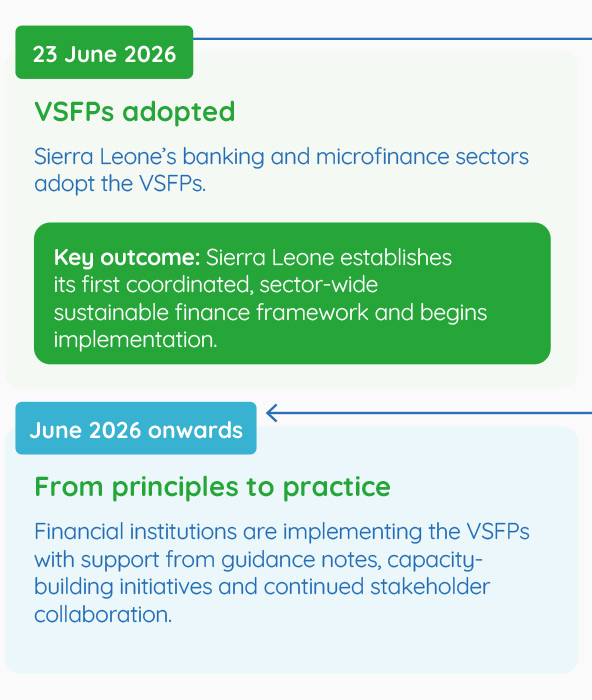
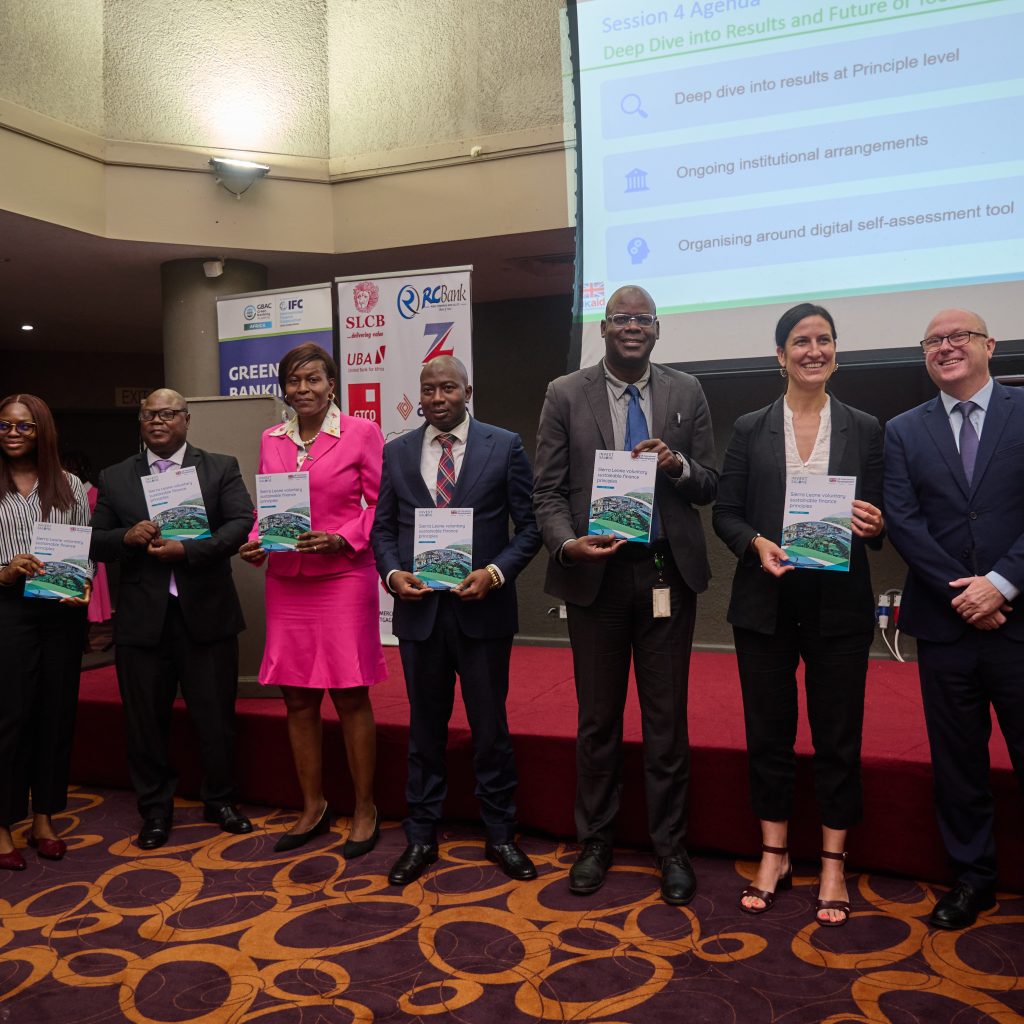
In parallel, Sierra Leone’s first ESG conference in 2025 broadened the conversation beyond financial institutions, linking sustainable finance to the wider ESG ecosystem, private-sector competitiveness and resilient growth. This culminated on 23 June 2026 with the adoption and launch of the Sierra Leone Voluntary Sustainable Finance Principles (VSFPs), establishing the country’s first coordinated, sector-wide voluntary sustainable finance framework for financial institutions.
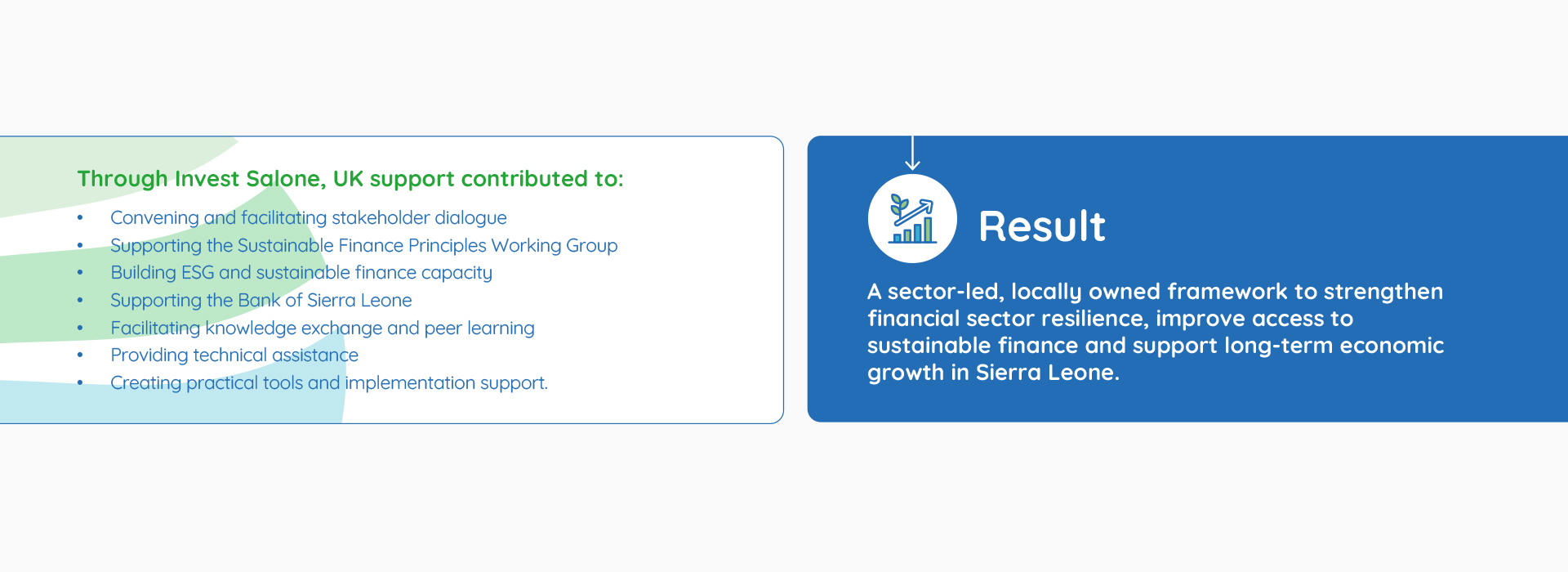
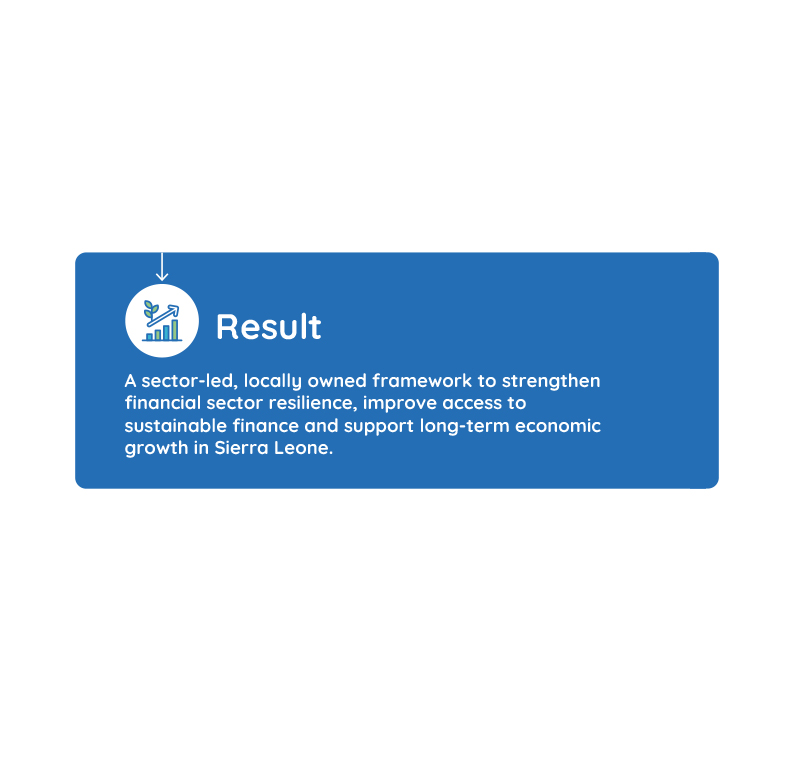
This knowledge bank brings together the resources developed along Sierra Leone’s sustainable finance journey, from early work on ESG and green growth to survey findings, capacity-building materials, practical tools, sector guidance and the VSFPs. Together, they illustrate how sustained dialogue, evidence, technical assistance and institutional capacity building contributed to a locally owned, sector-led approach, and how a complex reform agenda moved from initial awareness to an implementable financial-sector framework.
The experience offers wider lessons for practitioners working in emerging and developing markets, including the value of starting with sector needs, building institutional capacity, creating space for public–private dialogue and developing practical tools alongside policy or sector frameworks. Most importantly, it shows how external technical support can reinforce, rather than replace, local leadership and ownership as institutions move towards collective action.
The adoption of the VSFPs is both an outcome of this collaboration and a starting point for implementation. Their long-term value will depend on how effectively financial institutions translate the commitments into governance, risk management, product development, lending and investment decisions, and how the wider ecosystem continues to support implementation. For practitioners elsewhere, Sierra Leone’s experience provides a practical example of how a sustainable finance agenda can move from dialogue and diagnosis to collective action and an implementable sector framework.
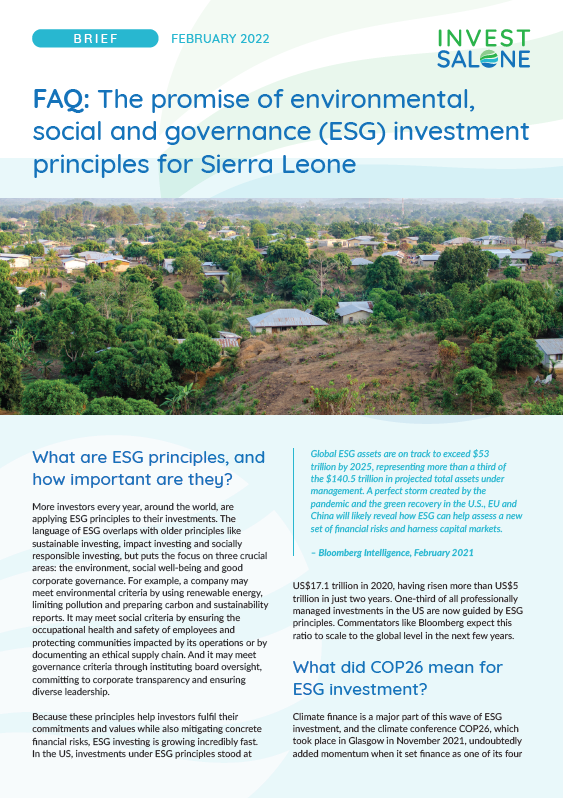

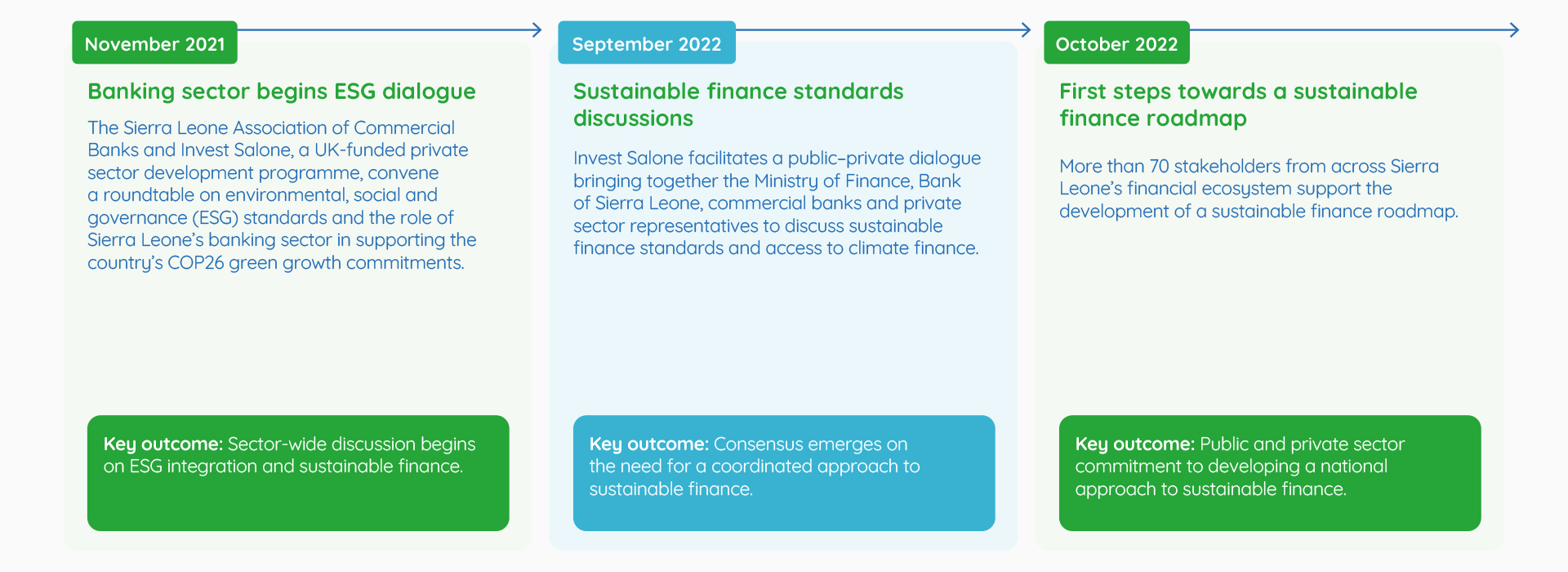
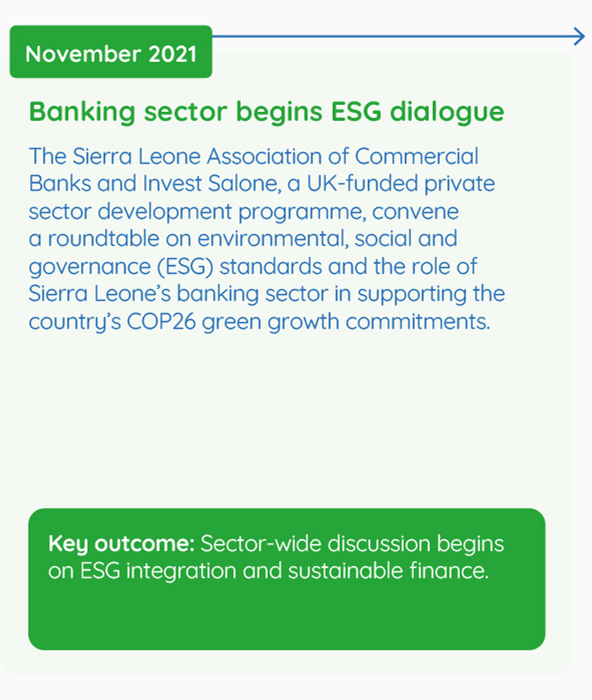
Sierra Leone’s banking sector looks to support the country’s COP26 green growth commitments through ESG standards
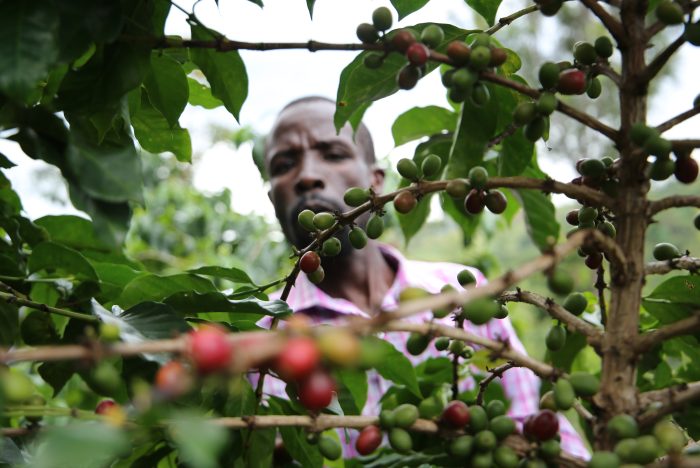
Sierra Leone’s financial sector to meet to discuss sustainable finance standards
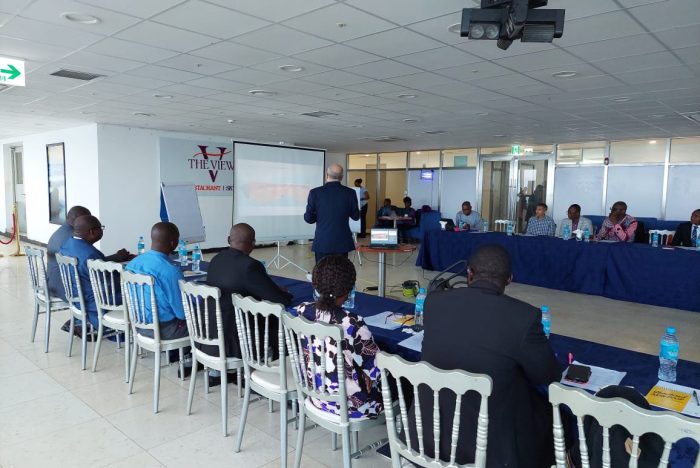
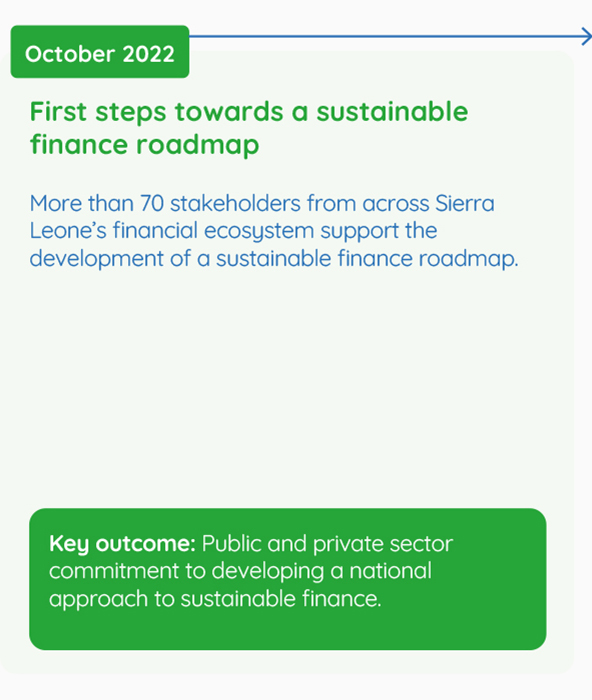
Sierra Leone’s public and private sector take the first steps towards a sustainable finance roadmap

Invest Salone releases toolkit to help Sierra Leone’s banks apply for green growth finance
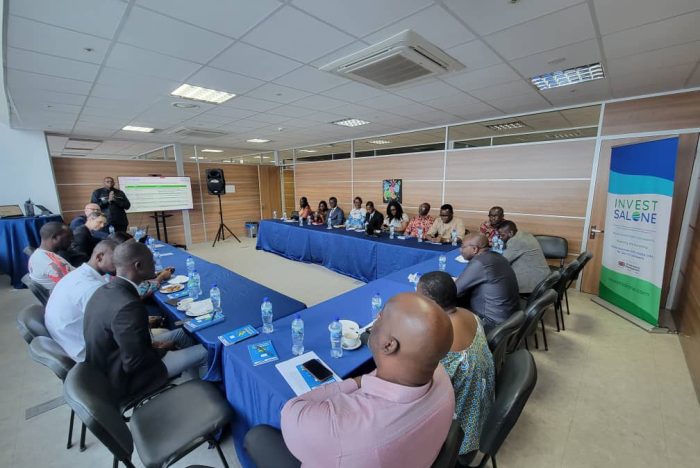
The commercial banking sector discusses voluntary sustainable lending principles for Sierra Leone
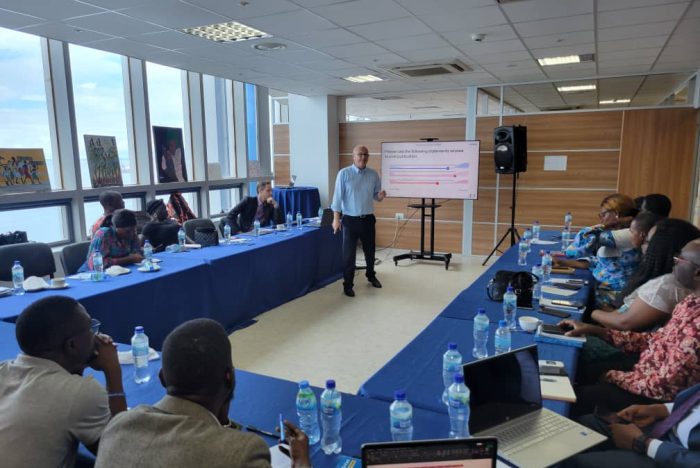
Mobilising green finance: Insights and predictions from Sierra Leone’s financial sector

First working group meeting for voluntary Sustainable Finance Principles in Sierra Leone
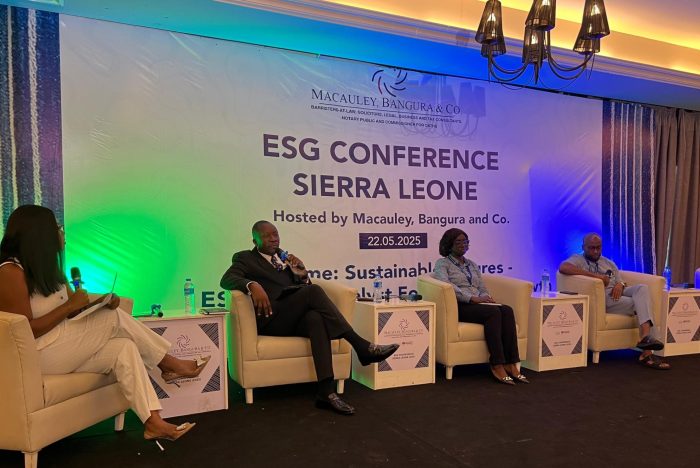
Sierra Leone’s first ESG conference highlights its positive impact on business growth
Sierra Leone voluntary sustainable finance principles
Sierra Leone voluntary sustainable finance principles: Sector-level guidance for financial institutions
Survey insights from sustainable finance seminar in Sierra Leone